
One E-Bike
In Your Building
Can Shut You Down.
Your employees are rolling lithium batteries into your building every day. E-bikes. E-scooters. One thermal runaway event — one bad cell, one failed charger — releases more peak heat than a gallon of burning jet fuel. Standard extinguishers won't stop it. Your existing suppression system wasn't designed for it.
E-Bikes & Scooters
Stored indoors overnight. Charging cables fail. One bad cell triggers the pack.
Workplace Liability
Employees storing personal e-bikes in your building puts your property and your people at risk.
Residential Garages
A garage fire at 3am gives a family no time to escape. Thermal runaway doesn't warn you.
Any Lithium Battery
Forklifts, golf carts, UPS systems, laptops — if it has lithium, it has thermal runaway risk.
More Heat Than Jet Fuel.
In Your Garage.
A standard kids' e-bike battery holds 500Wh of energy. That sounds modest — until thermal runaway begins. The fire doesn't burn the stored electrical energy. It burns the battery itself: the electrolyte, the cathode, the separator. Peak heat release during a full pack runaway can hit 218,000 BTU/hr — surpassing a gallon of burning jet fuel. And it can't be smothered with water or CO₂.
(100LL Avgas)
(Commercial)
(250–500Wh pack)
(1kWh pack)
Large E-Bike
(1.2kWh pack)
Stops Thermal Runaway
Peak Cell Temperature
Hotter than a wood stove, a campfire, and most structural fires. Standard extinguisher agents flash off before they reach the burning cells.
Smoke to Flashover
FDNY tests documented only 15 seconds between first visible smoke and windows blowing out of a residence. There is no time to react.
Invisible Killer
Thermal runaway releases hydrogen fluoride — a colorless toxic gas that corrodes lungs. Water doesn't neutralize it. FCL-X chemically binds HF into harmless salts.
Real Fires.
Real Families.
Real Deaths.
These aren't warnings about what could happen. They already did. Homes destroyed, lives lost — all from lithium-ion batteries in everyday devices people never thought twice about.
Whole House Gone in 20 Minutes
A Tennessee couple lost everything when cheap Amazon solar deck lights failed. Investigators ruled out every other ignition source. The product didn't even disclose it contained a lithium-ion battery.
Two Sisters. Ages 2 and 10. Dead.
A hoverboard battery fire killed two young sisters in their home. Part of a broader wave of 250+ hoverboard fire incidents tracked by the CPSC, causing millions in property damage nationwide.
Three Generations. One Fire. All Gone.
A lithium-ion battery fire killed a 6-year-old girl, her grandmother, and her great-grandmother overnight. The CPSC used this case to push for new federal battery safety rules.
Twice in 12 Days. Same Family.
One family was hit by two separate lithium-ion battery fires within 12 days — one destroyed their car, the second damaged their home. They didn't even recognize the second device as battery-powered.
Fire Chief Issues Public Warning
A lithium-ion battery in an electric unicycle caught fire in a living room, displacing five residents. The fire chief issued a formal public warning about charging these devices indoors.
100+ Batteries. 700 Cells. One Cellar.
Over 100 lithium-ion batteries ignited in a home cellar where someone was illegally repairing and assembling e-bike batteries. FDNY noted a record year for structural fires caused by lithium-ion batteries.
This Isn't Hypothetical.
Every one of these scenarios is happening right now in South Dakota, Iowa, Minnesota, and Nebraska. If you have lithium batteries on your property — business or residential — you have this risk.
The Garage Fire
Your kid's e-bike is charging overnight in the garage. The battery management system fails. Thermal runaway begins at 2am. Within 15 seconds of first smoke, flames are reaching the ceiling. The car, the freezer, the drywall — all gone before the fire department arrives. The house is at risk within minutes.
A standard ABC extinguisher will not stop this. The electrolyte fire relights the moment you stop spraying. Only a lithium-specific agent that penetrates the cells and stops the chain reaction can end it.
The Office E-Bike
Your employee rides their $3,000 e-bike to work and stores it in the break room or warehouse. You have no policy against it — yet. That single bike is a 1kWh lithium bomb in your building. When it fails, your fire suppression system is designed for ordinary fires, not thermal runaway.
The business liability from an unmitigated lithium fire — damaged equipment, injured employees, insurance claims, OSHA investigations — far exceeds the cost of having the right extinguisher on the wall.
The Warehouse
Your fleet of electric forklifts, pallet jacks, or delivery vehicles live in your warehouse. Each one has a lithium battery pack orders of magnitude larger than an e-bike. A single cell failure in a 100kWh forklift battery can produce enough heat to destroy an entire facility — and the thermal runaway chain reaction means no one cell stops until the pack is gone.
Your current fire suppression system was designed before electric forklifts existed. FCL-X is the only PFAS-free agent proven to stop this specific fire chemistry.
Your Current Extinguisher
Will Fail This Fire.
ABC dry chemical, CO₂, and water were engineered for ordinary combustibles. Lithium-ion fires are fundamentally different — the battery generates its own oxygen as it burns. Here's why standard approaches don't work.
ABC Dry Chemical
Smothers ordinary fires. Can't penetrate battery cells. The chemical reaction continues internally — the battery relights the moment agent settles. Classified as ineffective on lithium-ion fires by NFPA and UL researchers.
CO₂ Extinguisher
Displaces oxygen — but a lithium-ion battery in thermal runaway produces its own oxygen from the cathode. Removing ambient oxygen doesn't stop the internal reaction. The fire continues in a vacuum.
Water / Standard Suppression
Large volumes can cool the pack — but water vaporizes instantly at 800°C surfaces, causes steam explosions near burning electrolyte, and does nothing to neutralize the toxic hydrogen fluoride gas being released simultaneously.
Foam / Halon
AFFF foam contains PFAS "forever chemicals." Halon was banned. Neither addresses the internal cell reaction. The FDNY and UL Research Institutes specifically flagged these as inadequate for lithium-ion thermal runaway scenarios.
FCL-X Works Differently.
Penetrates the cells — FCL-X soaks into the battery structure to reach cells in active thermal runaway and interrupt the chain reaction at the source.
Rapid thermal cooling — Water-based formula drops cell temperature faster than any dry agent, removing the heat energy driving the reaction.
Stops reignition — Creates a protective thermal barrier that prevents cells from re-entering runaway hours after initial suppression.
Neutralizes HF gas — Chemically reacts with hydrogen fluoride to form non-hazardous salts, reducing respiratory toxicity exposure for occupants and first responders.
No PFAS — No "forever chemicals" — Made in Georgia, USA. Safe for environment, safe for people, safe for indoor use near electronics and equipment.
FCL-X Product Line.
From a compact unit for the garage to industrial wheeled systems for warehouses and fleet operations. Heiman Industrial is your authorized FCL-X dealer in the tri-state region — we stock, service, and advise.

FCL-X 20oz
Purpose-built for small lithium fires: e-bikes, e-scooters, power tools, and everyday electronics. Lightweight, easy to use, and designed for fast access when seconds matter.
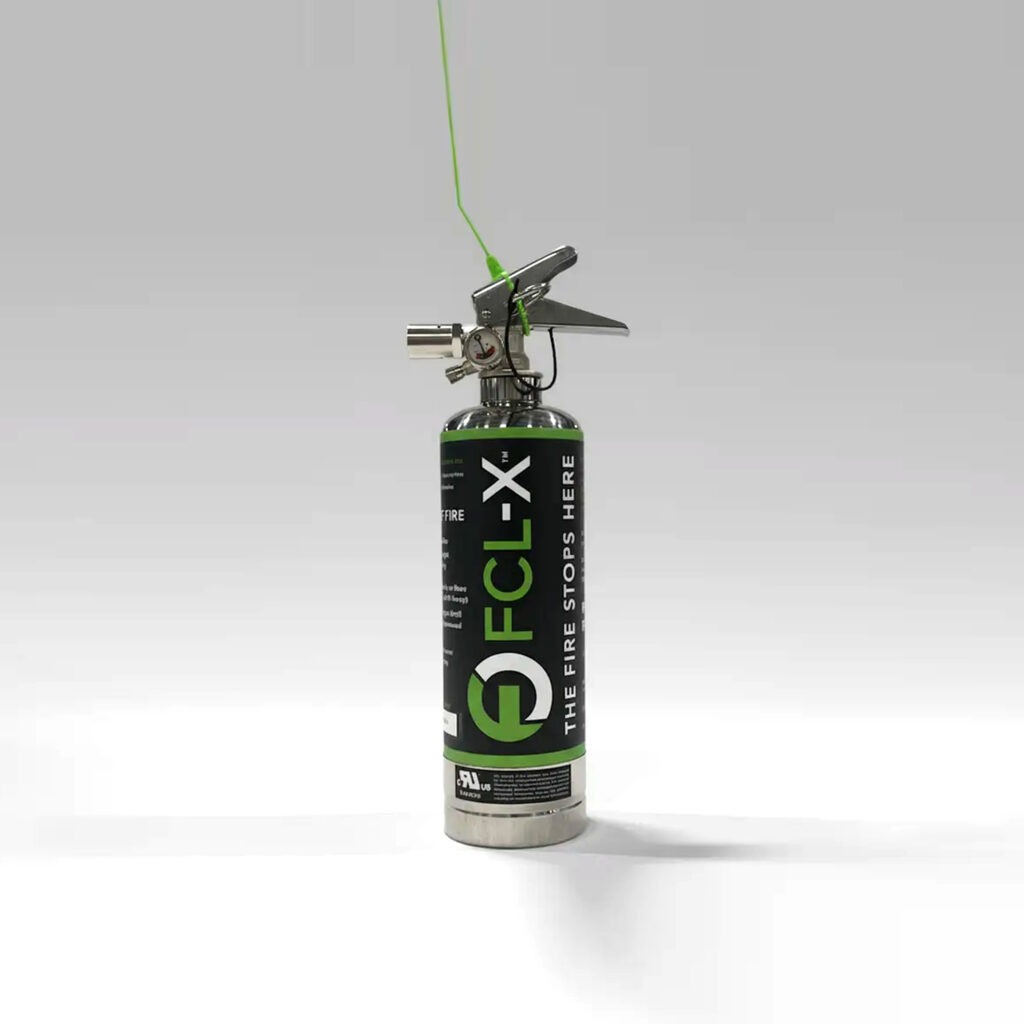
FCL-X 1 Liter
Ideal for small lithium-ion fires — power tools, laptops, tablets, e-bikes. Compact enough for any charging area, effective on full-pack thermal runaway in small devices.

FCL-X 2 Liter
Increased agent capacity for garages, fleet charging areas, and recreational applications with higher concentrations of lithium batteries — e-bike racks, golf cart bays, marine electronics.
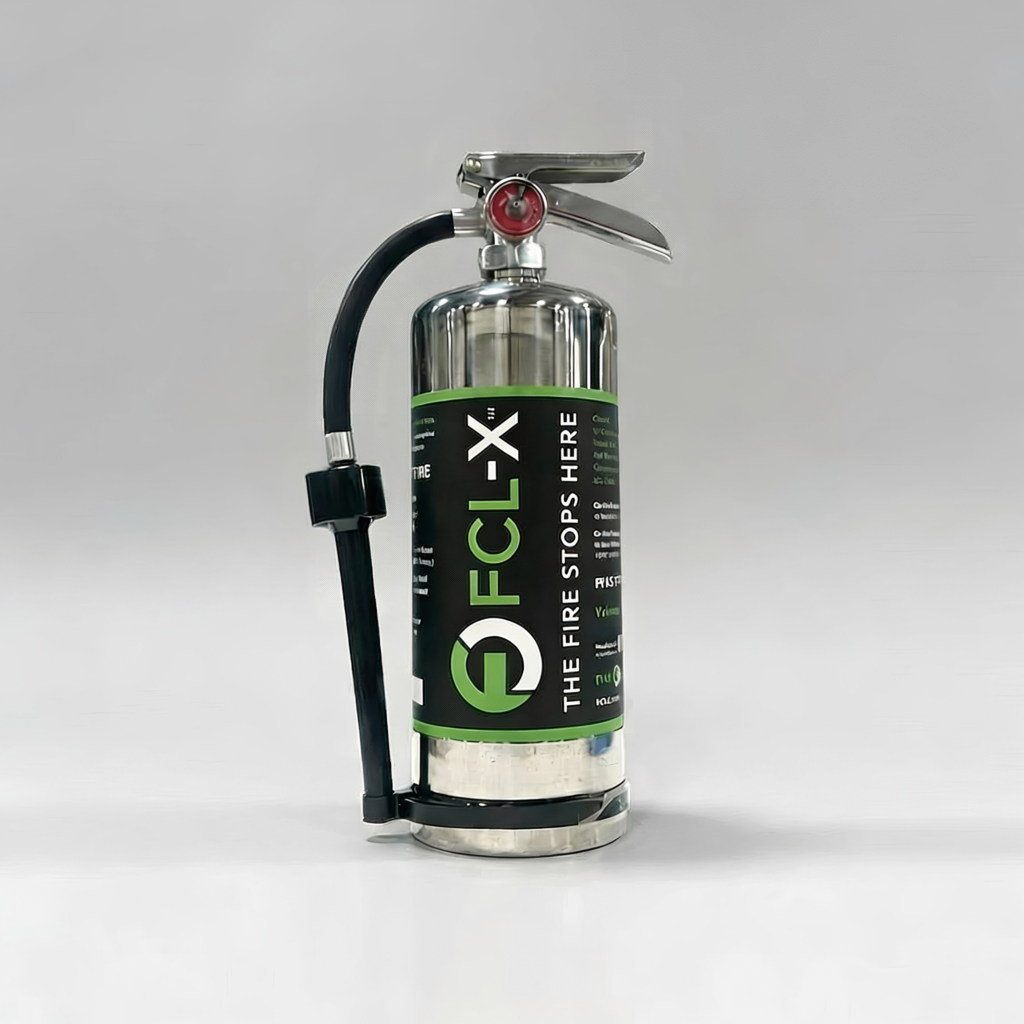
FCL-X 3 Liter
Maximum portable capacity. Extended discharge for higher-energy battery risks. Ideal where multiple large lithium packs are in service — commercial warehouses, battery storage, fleet operations.
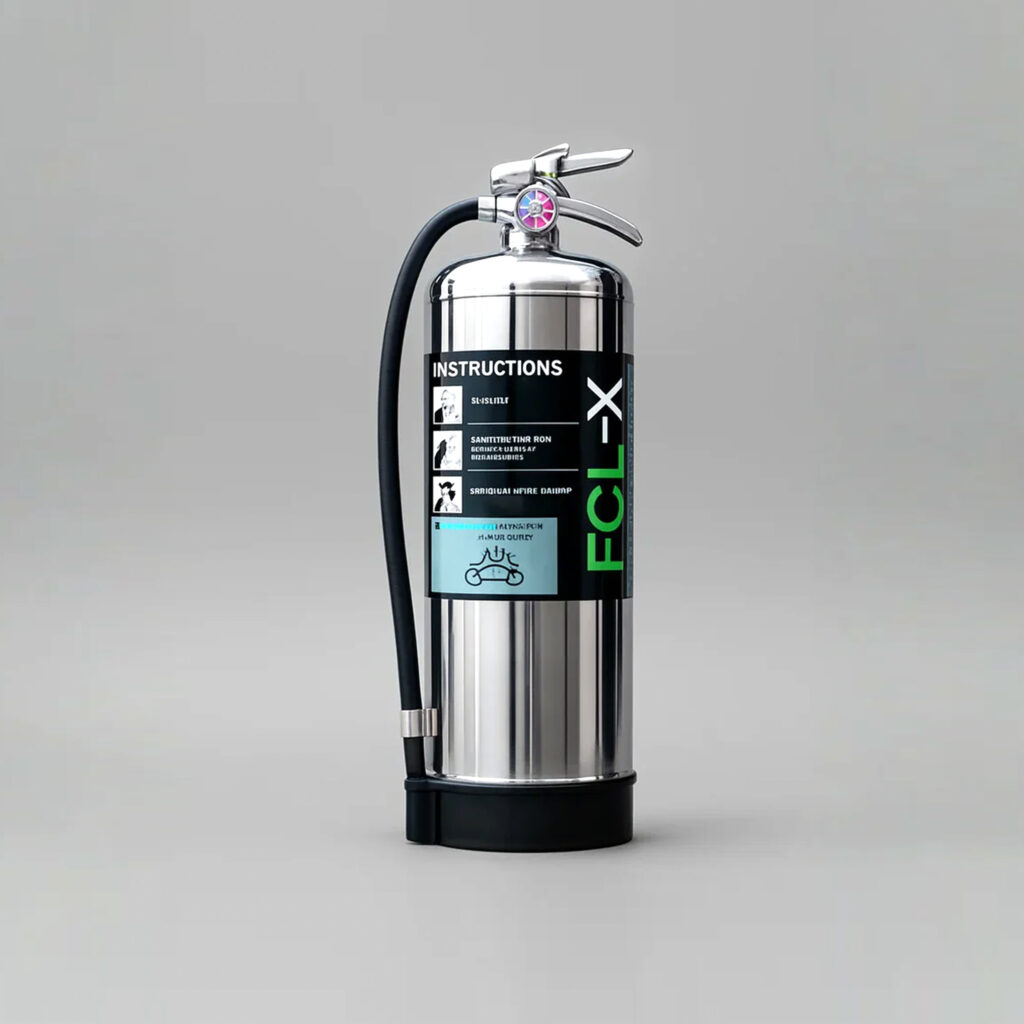
FCL-X 2.5 Gallon
High-performance suppression for technical environments. Class A certified. Effective on large battery packs, EV fires, and industrial battery storage. Rapid knockdown and thermal containment. Recharge available.
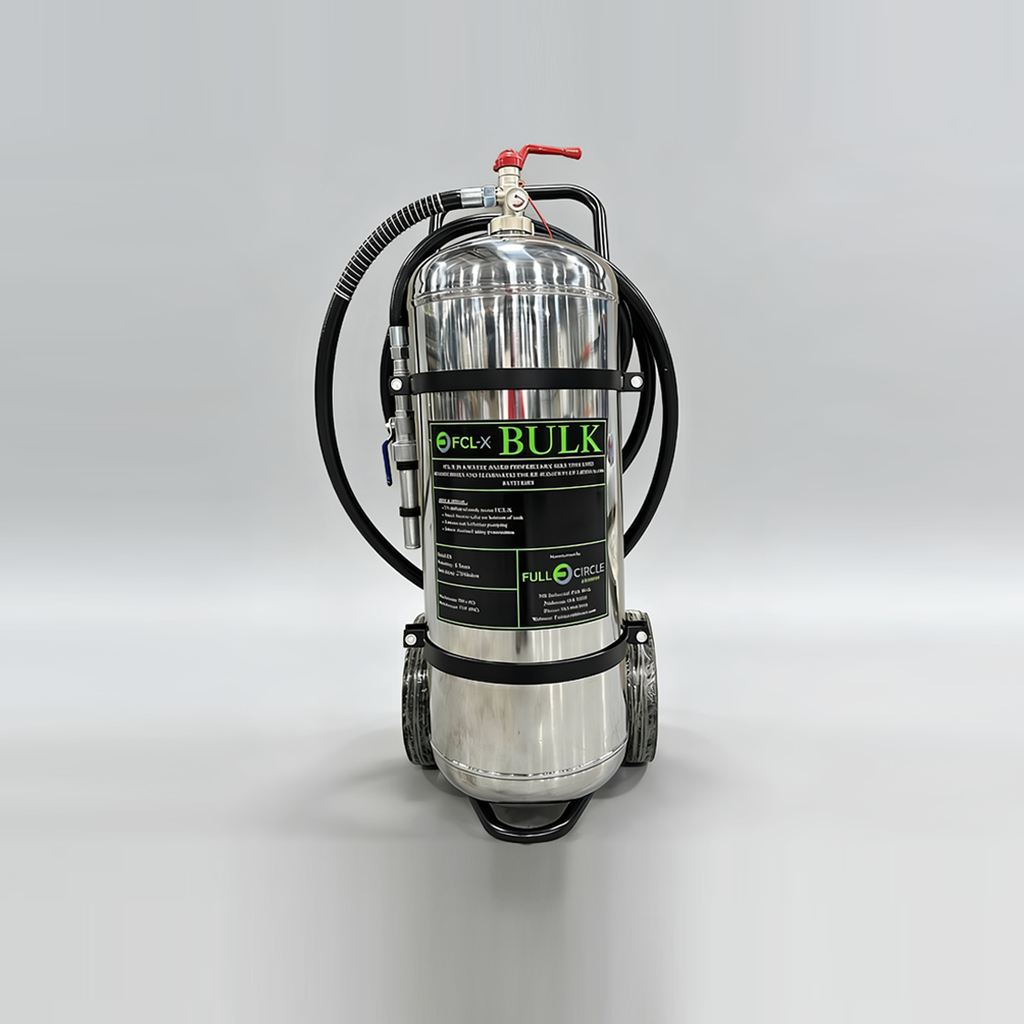
FCL-X 50 Liter
Wheeled industrial unit for high-risk commercial environments. Increased capacity and performance for warehouses, service facilities, charging stations, and operations managing large lithium battery quantities.
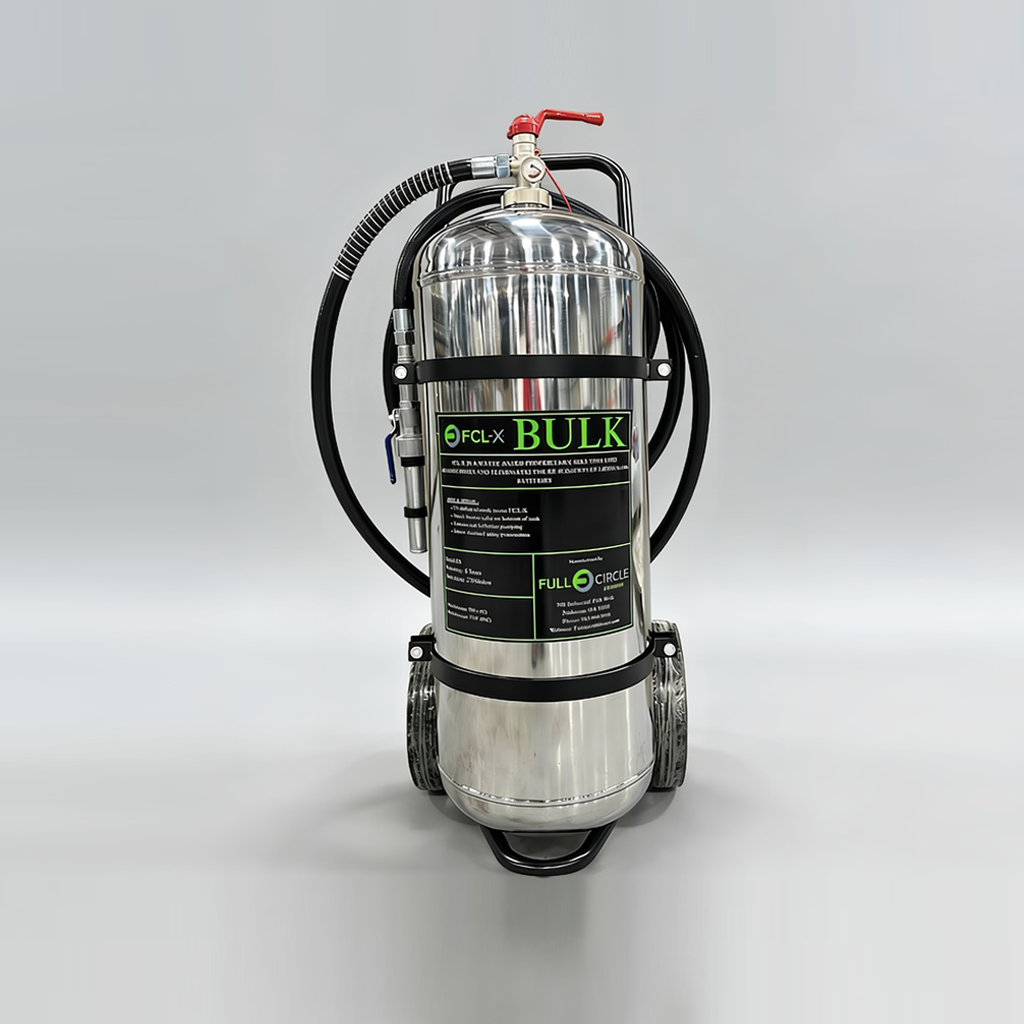
FCL-X 100 Liter
Maximum capacity wheeled system for the highest-risk environments. Designed for facilities with large-scale lithium battery operations, municipal fire departments, and industrial emergency response.
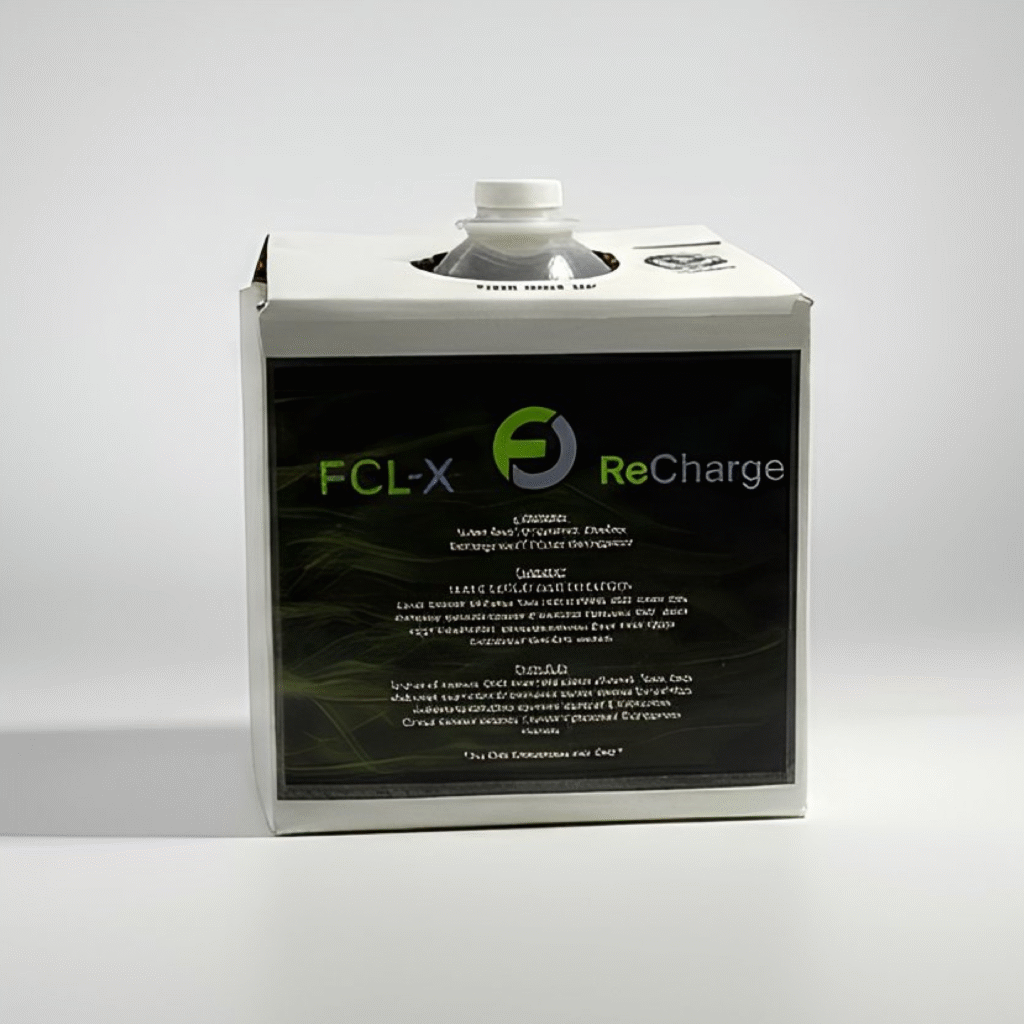
FCL-X ReCharge Available: The 2.5 Gallon unit can be recharged. Heiman Industrial stocks FCL-X ReCharge 2.5 Gallon refills — the same PFAS-free, water-based formula, ready to restore your unit to full service status. Ask about our recharge program for commercial facilities.
Don't Wait for the
Fire to Start.
Your local Heiman rep covers your county. We assess your risk, recommend the right FCL-X unit, and make sure it's properly placed and documented. Same family. Same dedication. Since 1947 — now protecting you against the fire risk that didn't exist then.